A hundred years before Wittenberg, a reform was already burning in Bohemia — and it never entirely went out.
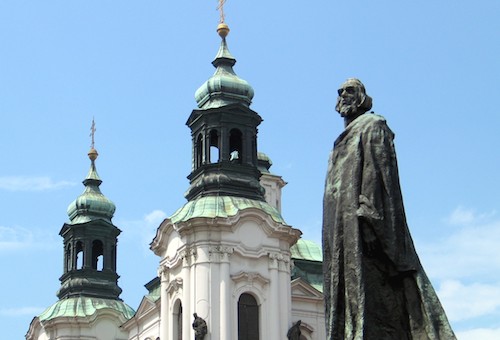
In 1402 Jan Hus began to preach at Bethlehem Chapel in Prague — in Czech, not Latin — that the church must return to the gospel. Thirteen years later he was burnt at Constance; his name became a movement.
The Hussites built the town of Tábor, defeated five crusades, and split into Utraquists and the radical Taborites. The Unity of the Brethren — later the Moravian Brethren — took the movement further: to Kralice for the Bible, to Herrnhut for refuge, and from there to North America.
After 1620 the reformation was crushed under the Habsburgs. For two centuries the story was underground. It re-emerged in the 19th century when Masaryk's new republic took the chalice as its symbol. That long arc is what our Reformation tours walk.
"Seek truth, hear truth, learn truth, love truth, speak truth, hold truth, defend truth till death."